

Laser Induced Fluorescence (LIF)
Laser Induced Fluorescence (LIF), delivered via an Ultraviolet Optical Screening Tool (UVOST®), allows for the rapid subsurface delineation of light non-aqueous phase liquids (LNAPLs) such as leaked fuel and oils.
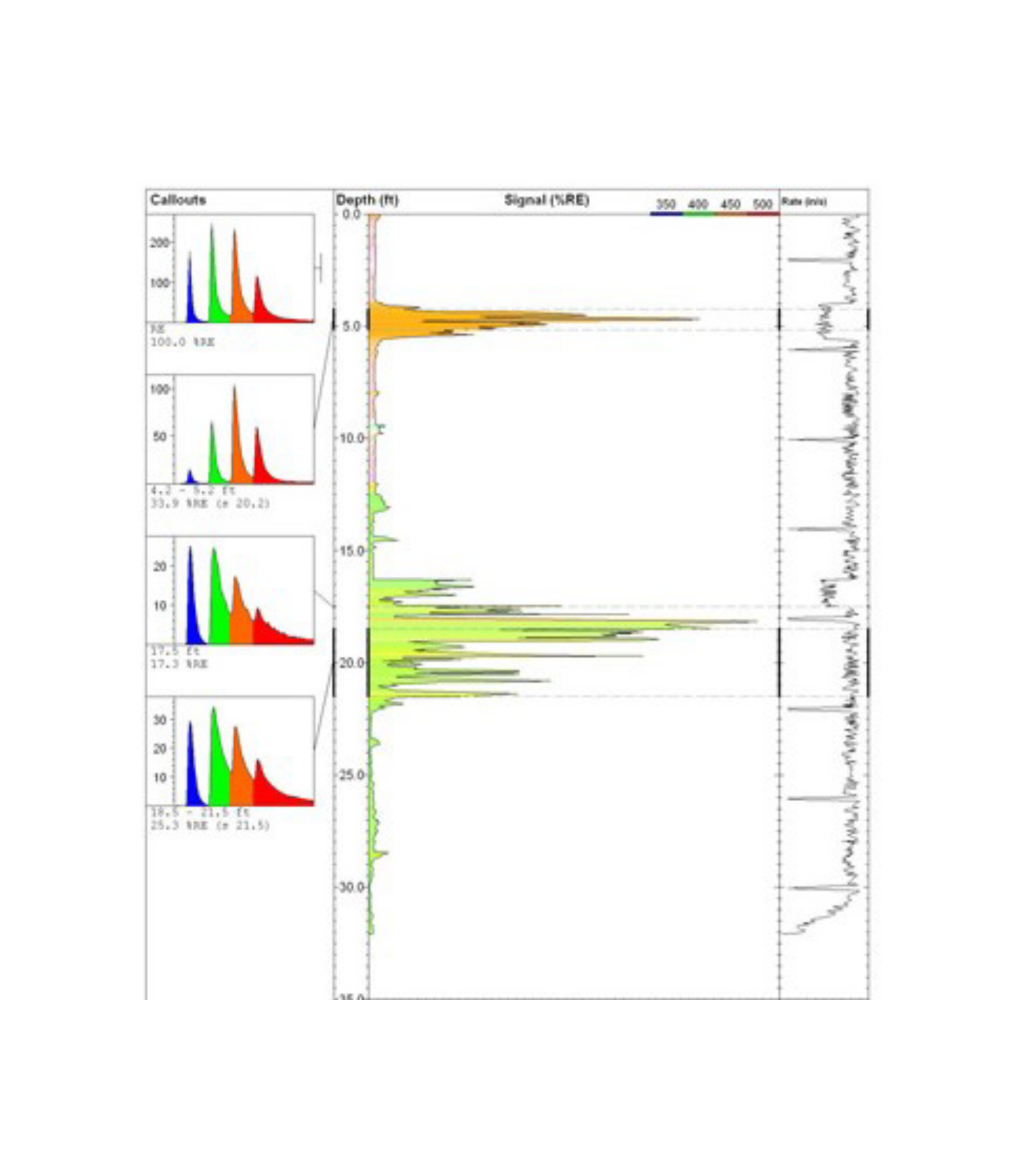
The UVOST® system distinguishes molecules found in LNAPLs, like petroleum-based fuels and oils (i.e. gasoline, kerosene, fuel oil, etc.) by assessing fluorescence intensity, wave spectrum, and time decay of these polycyclic aromatic hydrocarbons (PAH’s) fluorescence return signals. This provides a “visual” map of underground oil spills without the guesswork of traditional soil boring.
Effective media
Soil & Vadose Zone
Targeted contaminants
Petroleum Hydrocarbons, Gas, Diesel, and Jet Fuel
Real-Time Petroleum Plume Delineation
LIF response varies according to PAH concentration and composition. These properties, including the fluorescent nature of the compounds, allow the UVOST® to provide both qualitative and semi-quantitative data on the extent of the contamination.
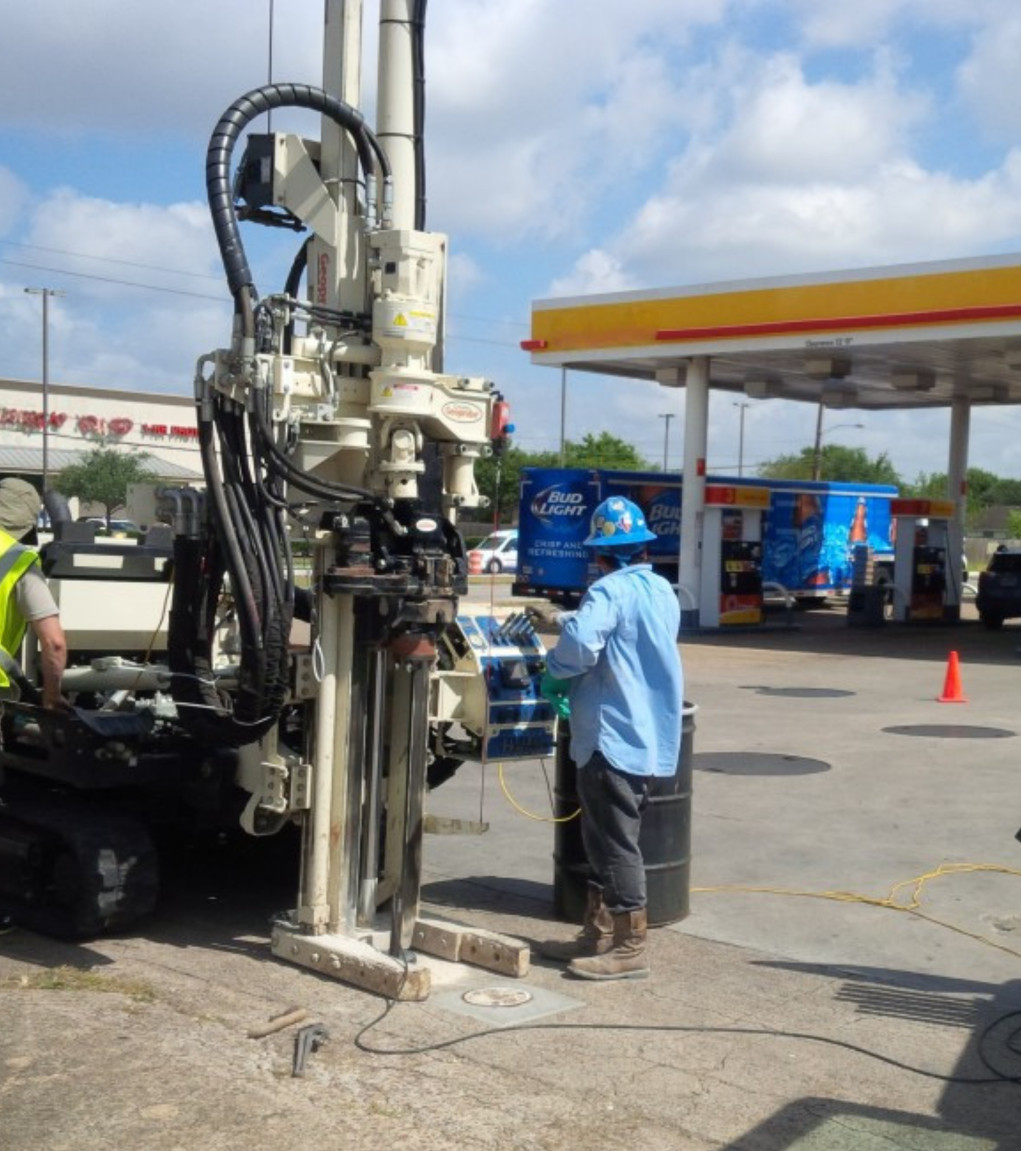
Using direct push drill rigs (i.e. Geoprobe), the UVOST’s rugged design and tooling has the capacity to screen 100 – 150+ m per day, making it an exceptionally fast tool for identifying and delineating petroleum plumes.
High-resolution data (1 – 2 cm resolution with a 2 cm/sec push rate) is available in real-time on logs plotting fluorescence response vs depth. This allows for immediate site-specific decision-making while in the field, saving time and reducing the number of laboratory samples needed.
MiPHT
The MiHPT system is a combined unit that includes the Membrane Interface Probe (MIP) and Hydraulic Profiling Tool (HPT). These technologies work together to delineate petroleum and chlorinated volatile contaminants (VOCs), as well as map underground water flow and soil
permeability in-situ. Contaminant and soil structure data can then be modeled to create a high-definition 3D understanding of subsurface dynamics.
Membrane Interface Probe (MIP) for VOC Screening
The MIP is a rapid subsurface screening tool designed to log the relative concentrations of volatile organic compounds (VOCs) vertically in the subsurface. The probe is directly pushed or percussion hammered into the ground.
Downhole, a heater block and a semi-permeable membrane are used in conjunction with an inert carrier gas to transport the contaminants encountered to the above-ground sensing equipment. The MIP uses a photoionization detector (PID), a flame ionization detector (FID), and a halogen-specific detector (XSD) to differentiate between chemical compounds (like TCE, PCE, or Benzene) and measure their relative concentrations. This screening provides a robust spatial understanding of the distribution of dissolved, vapour, and sorbed phase volatile contaminants.
Effective media
Soil & Groundwater
Targeted contaminants
Volatile Organic Compounds (VOCs), Chlorinated Solvents, & petroleum products
Hydraulic Profile Tool (HPT)
The hydraulic profiling tool is a powerful technology designed to assess how water and contaminants move through the subsurface. As the probe is advanced via direct push or percussion hammer, water is injected at a known pressure into the soil.
This injection pressure reflects the permeability (how easily liquid moves) of the subsurface strata, allowing for the mapping of preferential migration pathways for contaminants. The MiHPT can also be used to assess hydrostatic pressures, to estimate the water table, and hydraulic conductivity in the saturated zone.
This technology provides critical information for identifying potential “fast tracks” where contamination might spread, allowing us to design remedial programs with confidence, and place remediation wells in the most effective locations.